
The Category
Companies fail in the gap between the bench and the line
Food tech companies rarely fail because the technology does not work. They fail between a validated bench process and a commercially viable production line. That gap is a hiring problem: process engineers who have scaled a biological process, operations leaders who have commissioned a facility, commercial leaders who can sell an ingredient to a skeptical formulator.
The pool is unusual. The people who can do this often come from pharma, biotech, industrial fermentation or conventional food manufacturing rather than from food tech itself, because the category is too young to have produced many of them. Finding them means recruiting across industry lines, which generalist searches do badly.
There is a funding reality to screen for too. A senior hire joining a venture-backed company needs to be honest with themselves about runway and pivot risk. We surface that in the process rather than letting it land after an offer.
- 01
- Scale-up evidenceHave they taken a process from bench to commercial volume. Most candidates have not, whatever the resume implies.
- 02
- Cross-industry fitPharma and industrial fermentation produce the best scale-up engineers in this category. We go there deliberately.
- 03
- Runway honestyWe tell candidates the stage and the risk up front. It costs a few candidates and saves the search.
What We Cover
Roles We Place Across Food Tech and Alternative Protein
We place scientific, engineering and commercial leadership, including the scale-up roles that decide whether a company makes it. Work with a specialized CPG recruiter or food and beverage recruiter who knows your world, or see how our search model works.
Science
- VP of R&D
- Principal Scientist
- Fermentation Scientist
- Protein Chemist
- Sensory Lead
Process and Scale-Up
- Director of Process Engineering
- Scale-Up Engineer
- Bioprocess Engineer
- Pilot Plant Manager
Commercial
- VP of Business Development
- Director of Ingredient Sales
- Technical Sales Manager
- Head of Partnerships
Regulatory
- Director of Regulatory Affairs
- GRAS and Novel Foods Lead
- Food Safety Manager
Leadership
- CEO
- CTO
- COO
Candidate Evaluation
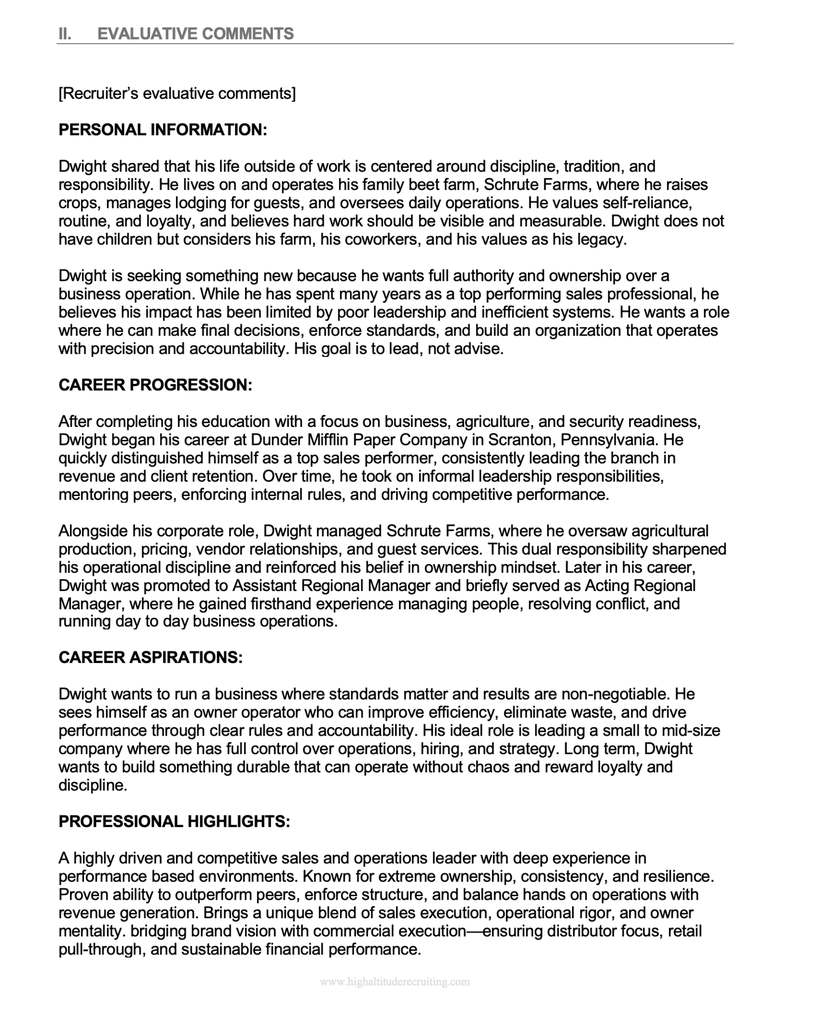
You meet the person before the first interview
Every finalist arrives with a written evaluation, not a resume and a sentence. Interview notes from several conversations, a homework assignment tied to your biggest need, career motivations, and the resume itself, merged into one document on your portal.
You will not get a weekly summary email. You will see the candidate the day we add them.
Where we work in the category
- Alternative and plant-based protein
- Precision fermentation
- Cultivated meat and seafood
- Novel ingredients
- Food robotics
- Agtech and vertical farming
- Shelf-life technology
- Enzymes and processing aids
Common Questions
Food Tech recruiting, answered
Which food tech roles are hardest to fill?
Process engineering and scale-up. These are the roles that most often decide whether a company reaches commercial production, and the qualified pool is small enough that every search runs on direct outreach.
Where do food tech candidates come from?
Often from adjacent industries. Pharma, biotech, industrial fermentation and conventional food manufacturing all produce people who can scale a process. We recruit across those lines deliberately rather than limiting the search to food tech.
Do you recruit for alternative protein companies?
Yes, across plant-based, fermentation-derived and cultivated. The brief differs considerably between them on the engineering side, so we calibrate against the specific platform rather than treating it as one pool.
How do you handle hiring for venture-backed companies?
We are direct with candidates about stage, runway and pivot risk. A senior hire who learns those realities after starting rarely stays, so being straight early is cheaper than a failed placement.
What regulatory roles do you fill?
Directors of regulatory affairs, GRAS and novel foods leads, and quality leadership. For a company bringing a novel ingredient to market this often determines the commercial timeline, and it is consistently underestimated.
Hiring in food tech?
Tell us the seat. We will show you how we would run the search.